A quality leather car seat is defined by what you cannot see. Durability testing, compatibility with airbags and safety systems, careful material inspection and precise manufacturing are what separate a seat that lasts and performs from one that only looks good on day one. This is the engineering and craftsmanship behind the surface.
If you are still deciding whether leather is right for your car, start with Part 1, our buyer’s guide to leather car seats. This article is about what makes a leather seat genuinely well made.
Why durability matters for leather car seats?
A car seat is one of the most heavily used parts of any vehicle. People sit, shift and slide across it every day, and over time that repeated contact causes surface wear and material fatigue. Durability is therefore one of the most important things to get right.
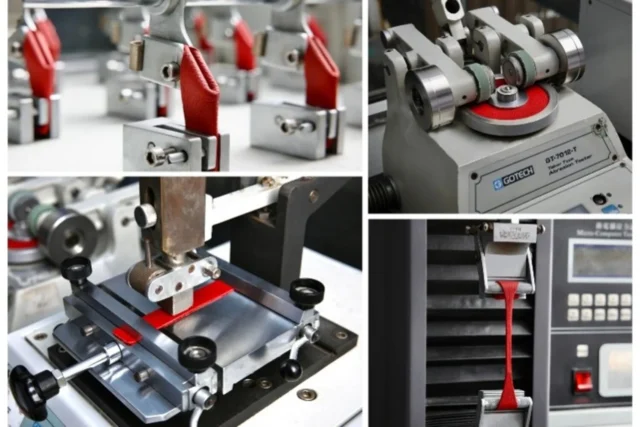
Depending on the material and application, performance is assessed through controlled testing, which can include:
- Abrasion resistance
- Flexing performance
- Tensile strength
- Rub fastness
- Surface performance
- Material thickness and consistency
These tests show how a material holds up under repeated use, not just how it looks on the day it is installed. A quality leather car seat is judged by how well it keeps its appearance and function over years of driving.
Leather car seats and vehicle safety systems
A vehicle seat is part of a larger safety system, and the upholstery has to respect that. Modern seats can include side airbags and passenger detection sensors, so the seat cover and its construction must be designed around the underlying seat and its safety requirements. Where a side-impact airbag deploys through the seat, specialised stitching and construction are needed so the airbag releases exactly as intended.
This is where manufacturing quality becomes a safety matter, not just an appearance one. At Pecca Leather, automotive seat covers have undergone airbag deployment testing through recognised testing organisations, including Autoliv and MGA Research Corporation, covering applicable side-impact airbag and passenger seat sensor requirements under FMVSS standards. It is a clear example of why automotive seat upholstery involves far more than cutting and sewing material around a seat.
How to tell quality car seat leather
A few simple signs point to quality and to genuine leather. Real leather shows slight grain irregularities and natural pores, feels warm and supple, and often carries a natural scent, while synthetic surfaces look uniformly perfect and can feel cooler or more rigid. Fit and stitching matter too: a quality seat sits snugly with clean, even seams and no loose tension.
Behind the scenes, consistency starts before any leather is cut. Material inspection can include checks on surface condition, thickness, colour consistency and physical performance. These checks matter most when producing many seat covers that need to match, since even small inconsistencies show once the seats are installed side by side.
Colour, design and finish
Leather also shapes interior styling. Black remains a familiar choice, but interiors can use a wide range of colours, two-tone combinations and stitching details that change the whole character of a cabin. The leather surface adds to the look through its grain, texture and finish. Seat upholstery is a functional component and a design element at the same time.
From leather material to finished car seat
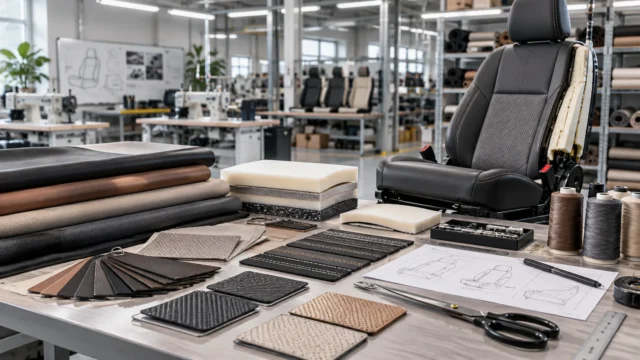
Turning leather into a finished automotive seat runs through several stages:
Material inspection, then pattern development, cutting, sewing, quality inspection, upholstery and final inspection.
Each stage shapes the outcome. Pattern development has to account for the seat’s exact shape, cutting has to follow the pattern precisely, sewing has to hold the required construction and appearance, and the final upholstery has to fit the seat correctly. This combination of material knowledge and manufacturing process is what turns a sheet of material into a finished leather car seat.
The difference is behind the surface
The appeal of a leather car seat begins with how it looks, but the finished product depends on much more: material selection, durability testing, seat construction, stitching, safety compatibility and manufacturing quality. At Pecca Leather, automotive upholstery capabilities cover styling, manufacturing, distribution and installation for OEM and REM applications, supported by an in-house StyleLab and R&D team that develops automotive interior solutions.
The leather is what you see and feel. The quality of the seat comes from everything behind the surface.
Frequently asked questions
Are leather car seats safe with side airbags?
They are when built correctly. Seats with side-impact airbags need specialised stitching and construction so the airbag deploys as designed, which is why airbag deployment testing matters.
How can I tell if a seat cover is well made?
Look for even, clean stitching, a snug fit with consistent tension, and consistent colour and grain across panels. Loose seams or uneven fit are signs of poor workmanship.
What testing do car seat materials go through?
Common assessments include abrasion resistance, tensile strength, flexing, rub fastness and thickness consistency, plus airbag and safety-system testing for the finished seat.
______________________________________________________________________________
New to leather seats? Read Part 1, our buyer’s guide covering genuine vs synthetic, heat, durability and whether leather is worth it. Click Here.