Key Takeaways
- IATF 16949 is a global quality management standard that ensures consistency, defect prevention, and supply chain reliability in automotive manufacturing.
- Certification is essential for suppliers aiming to work with OEMs, as it demonstrates strong process control, risk management, and continuous improvement.
- For automotive interior manufacturers, compliance supports high product quality, operational efficiency, and credibility in global supply chains.
What ensures that automotive components—from seat upholstery to dashboard materials—meet the strict quality standards required by global vehicle manufacturers?
In the modern automotive industry, consistency, safety, and traceability across the supply chain are essential. One of the key frameworks that helps maintain these standards is IATF 16949, a globally recognised quality management system for automotive manufacturing.
Developed by the International Automotive Task Force (IATF) in collaboration with the International Organization for Standardization (ISO), IATF 16949 certification establishes a unified standard for quality management within the automotive sector. For manufacturers supplying components such as automotive interior materials, upholstery systems, and interior trim components, compliance with IATF 16949 signals a strong commitment to product quality, process control, and continuous improvement.
In this article, we explain what IATF 16949 certification is, how it works, and why it is essential for automotive interior manufacturers, particularly those participating in global OEM supply chains, including companies operating in Malaysia’s automotive manufacturing ecosystem.
What Is IATF 16949?
IATF 16949 is an international quality management system standard specifically designed for the automotive industry. It provides a structured framework that helps manufacturers and suppliers maintain consistent quality across the automotive supply chain.
The standard integrates requirements from ISO 9001, while introducing additional automotive-specific guidelines that focus on:
- Product quality consistency
- Process efficiency
- Risk management
- Defect prevention
- Supply chain reliability
IATF 16949 was created by the International Automotive Task Force, which includes major automotive manufacturers and industry associations. The goal is to ensure that suppliers across the global automotive supply chain follow consistent quality standards.
For manufacturers producing automotive interior components, such as seat covers, leather upholstery, interior trims, and interior panels, this certification helps ensure that products meet the expectations of global vehicle manufacturers.
Why IATF 16949 Matters in Automotive Manufacturing
Automotive manufacturing is one of the most complex and tightly regulated industrial sectors. Vehicles are produced at high volumes and must meet strict safety and reliability standards.
A small defect in a single component can lead to:
- Production delays
- Warranty claims
- Safety recalls
- Significant financial losses
This is why vehicle manufacturers require suppliers to implement strict quality management systems.
IATF 16949 certification helps ensure that suppliers can consistently deliver components that meet OEM specifications.
Key benefits of the standard include:
- Improved product quality
- Reduced manufacturing defects
- Enhanced process control
- Better supplier management
- Stronger collaboration with OEM manufacturers
For companies involved in automotive interiors, certification demonstrates the ability to produce reliable interior components at scale.
What Does a Quality Management System Do?
At the core of IATF 16949 is a robust quality management system (QMS). A QMS defines how an organisation manages processes, documentation, and continuous improvement to ensure consistent product quality.
For automotive manufacturers, a QMS typically covers:
- Product design and development
- Material sourcing
- Production processes
- Quality inspection procedures
- Supply chain management
By implementing a structured quality management system, manufacturers can identify potential risks, improve operational efficiency, and maintain high production standards.
Key Principles of IATF 16949
The IATF 16949 standard is built on several key principles designed to strengthen quality management within the automotive supply chain.
Customer Focus
Automotive manufacturers prioritise customer satisfaction and product reliability. IATF 16949 emphasises meeting OEM requirements and ensuring consistent product performance.
For automotive interior suppliers, this means ensuring that materials such as leather upholstery, seat fabrics, and interior trims meet strict quality specifications.
Process-Based Manufacturing
The standard encourages manufacturers to manage production through structured processes rather than isolated activities.
This approach ensures that every stage of manufacturing—from raw material handling to final product delivery—is monitored and controlled.
Risk-Based Thinking
Risk management is a central element of IATF 16949. Manufacturers must identify potential risks within their production processes and implement preventive measures to reduce defects.
Examples include:
- Monitoring production equipment performance
- Implementing quality checks during manufacturing
- Managing supplier reliability
By addressing risks early, manufacturers can avoid costly production issues.
Continuous Improvement
Continuous improvement is a key principle of IATF 16949.
Manufacturers must regularly evaluate their processes and implement improvements to enhance quality, efficiency, and customer satisfaction.
This may involve:
- Upgrading production technologies
- Improving workflow efficiency
- Enhancing quality inspection methods
How IAT F 16949 Supports Automotive Interior Manufacturing
Automotive interiors play a significant role in vehicle quality and customer experience. Components such as seat upholstery, leather trims, and cabin interior materials must meet strict durability and performance requirements.
Interior components must withstand:
- Daily passenger use
- Temperature fluctuations
- UV exposure
- Long vehicle lifecycles
IATF 16949 helps ensure that manufacturers can consistently produce interior components that meet these performance requirements.
For companies specialising in automotive interior manufacturing, certification demonstrates the ability to deliver high-quality materials that meet OEM expectations.
The Role of Suppliers in the Automotive OEM Supply Chain
The automotive industry relies on a highly structured supply chain where multiple suppliers contribute to the production of each vehicle.
Automotive manufacturers often work with several tiers of suppliers:
- Tier 1 suppliers that deliver complete systems
- Tier 2 suppliers that provide specialised components
- Tier 3 suppliers that supply raw materials
Each level of the supply chain must maintain strict quality standards to ensure overall vehicle reliability.
Because of this, many OEMs require suppliers to obtain IATF 16949 certification before they can participate in the supply chain.
Automotive Manufacturing in Malaysia
Malaysia has developed a strong reputation in the automotive sector, particularly in areas such as precision manufacturing, interior component production, and leather upholstery systems.
Manufacturers operating in Malaysia support both domestic automotive brands and international vehicle manufacturers through advanced production capabilities.
With the increasing global demand for high-quality automotive components, suppliers that implement internationally recognised quality standards—such as IATF 16949—are well positioned to participate in the global automotive supply chain.
Companies specialising in automotive interiors benefit from strong manufacturing expertise and technical capabilities that allow them to produce premium interior materials at scale.
Pecca Group’s Commitment to Automotive Quality Standards
Within Malaysia’s automotive manufacturing ecosystem, Pecca Group has established itself as a trusted supplier of premium automotive leather upholstery and interior components.
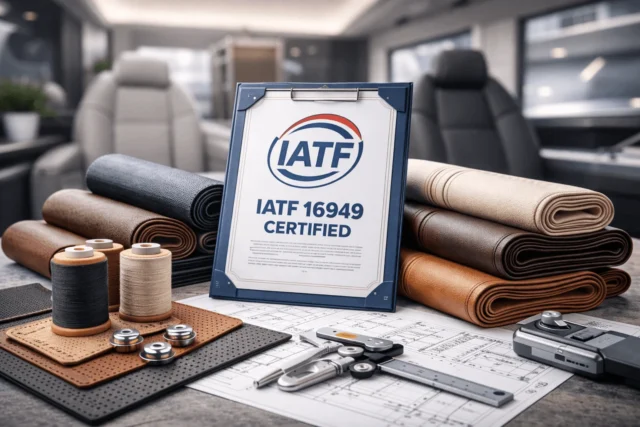
The company holds the International Automotive Task Force (IATF) certification, demonstrating its commitment to maintaining a high-level quality management system aligned with global automotive industry standards.
This certification supports Pecca Group’s ability to supply automotive interior solutions to international OEM partners while ensuring consistent product quality and manufacturing reliability.
By maintaining internationally recognised certifications, manufacturers strengthen their credibility within the automotive supply chain and reinforce their commitment to continuous quality improvement.
The Future of Quality Standards in Automotive Interiors
As the automotive industry evolves, the role of advanced quality management systems will become even more critical.
Emerging trends such as:
- Electric vehicles
- Autonomous driving technologies
- Smart cabin systems
- Sustainable interior materials
are increasing the complexity of automotive manufacturing.
To meet these challenges, automotive suppliers must continue improving manufacturing processes, product quality, and supply chain reliability.
Standards such as IATF 16949 will remain essential in ensuring that automotive interior manufacturers maintain consistent quality while supporting innovation in vehicle design.
Conclusion
IATF 16949 certification plays a critical role in ensuring quality and reliability across the global automotive supply chain. By implementing a structured quality management system, automotive interior manufacturers can maintain consistent production standards, reduce defects, and meet the strict requirements of OEM partners.
For companies producing automotive interior components—such as leather upholstery, seat covers, and cabin materials—this certification demonstrates the ability to deliver high-quality products that meet international automotive standards.
As the automotive industry continues to evolve, manufacturers that adopt recognised quality frameworks like IATF 16949 will remain essential partners in delivering safe, reliable, and innovative vehicle interiors.
Learn more about Pecca Group’s automotive certifications and quality standards: