Have you ever wondered why the materials used in aircraft seats and interiors are different from those found in cars?
While both industries rely on high-quality upholstery for comfort, durability, and aesthetics, aviation upholstery is engineered to meet far stricter safety, performance, and regulatory requirements than typical automotive interiors.
From fire resistance and weight limitations to durability under extreme conditions, aircraft upholstery must comply with rigorous international aviation standards that go beyond what is typically required in automotive manufacturing. At the same time, the automotive industry focuses heavily on scalability, design flexibility, and cost efficiency to support mass vehicle production.
Understanding the differences between aviation upholstery and automotive upholstery is essential for manufacturers, OEM partners, and supply chain stakeholders involved in interior component production.
In this article, we explore how upholstery fabrics, manufacturing processes, regulatory requirements, and performance standards differ between these two industries, particularly within the context of advanced manufacturing ecosystems such as Malaysia’s automotive and aerospace supply chains.
What Is Aviation Upholstery?
Aviation upholstery refers to the specialised materials and interior components used in aircraft cabins, including seat coverings, side panels, armrests, and cabin furnishings. Unlike automotive upholstery, aviation materials must meet strict aerospace standards related to safety, weight, and durability.
Aircraft interiors are designed to operate in unique environments that include:
- Significant altitude pressure changes
- Wide temperature variations
- Prolonged usage cycles
- Strict fire safety requirements
As a result, aircraft upholstery fabrics are engineered with advanced materials that prioritise safety and performance without compromising passenger comfort.
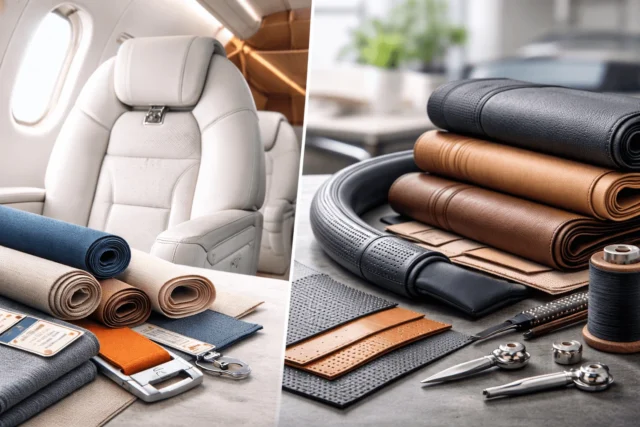
Common materials used in aircraft upholstery include:
- Flame-resistant leather
- Treated textile fabrics
- Lightweight synthetic materials
- High-performance foam composites
These materials are carefully selected and tested to ensure compliance with international aviation safety regulations.
What Is Automotive Upholstery?
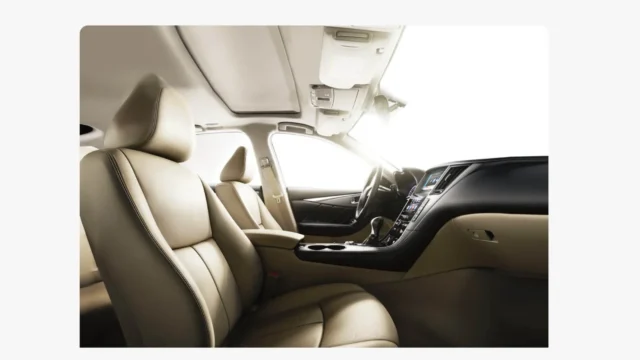
Automotive upholstery refers to the interior materials used in vehicles such as passenger cars, SUVs, and commercial vehicles. These materials are designed to provide comfort, visual appeal, and durability for everyday vehicle use.
Automotive upholstery typically includes:
- Leather seats
- Synthetic leather materials
- Fabric seat covers
- Interior trims and panels
While automotive upholstery also requires durability and quality, the industry places strong emphasis on design flexibility, production scalability, and cost efficiency to support high-volume manufacturing.
Automotive manufacturers must ensure that interior materials meet consumer expectations for comfort, appearance, and long-term wear resistance.
Why Are Aviation Upholstery Standards More Stringent?
One of the most significant differences between aviation and automotive upholstery lies in regulatory compliance.
Aircraft interior materials must comply with strict safety standards set by aviation authorities such as:
- Federal Aviation Administration (FAA)
- European Union Aviation Safety Agency (EASA)
- Civil Aviation Authority (CAA)
These regulations require upholstery materials to undergo extensive testing to ensure they meet strict performance criteria.
For manufacturers operating within the aviation supply chain, compliance with these standards is essential. Companies involved in aircraft upholstery production must obtain specialised aviation certifications to demonstrate their ability to meet aerospace safety and quality requirements.
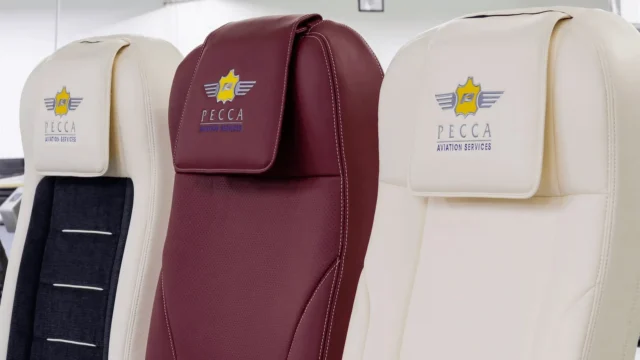
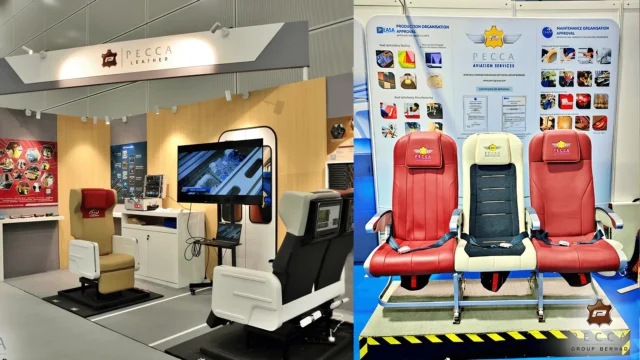
In Malaysia, Pecca Aviation has obtained certifications from both the European Union Aviation Safety Agency (EASA) and the Civil Aviation Authority (CAA). These certifications enable the company to manufacture and supply certified aircraft leather seat upholstery components that meet stringent aviation regulatory requirements. With these approvals, Pecca Aviation is able to support aircraft interior refurbishment and upholstery programmes within the international aerospace supply chain.
Explore Pecca Aviation’s aerospace certifications and compliance standards: Pecca Aviation Certifications
Fire Resistance Requirements
Aircraft upholstery fabrics must meet stringent flame retardancy standards to minimise fire risks in the cabin environment.
Testing typically includes:
- Vertical burn tests
- Heat release rate testing
- Smoke density measurement
These tests ensure that upholstery materials will not rapidly spread fire in the event of an onboard emergency.
Automotive upholstery materials also undergo fire safety testing, but aviation regulations are significantly more demanding due to the enclosed nature of aircraft cabins.
How Does Weight Affect Aviation Upholstery Design?
Weight is a critical factor in aircraft design because it directly affects fuel consumption and operational efficiency.
Every component used in an aircraft cabin—including upholstery fabrics—must be carefully engineered to minimise weight while maintaining durability and safety.
Aircraft seat upholstery is often designed using:
- Lightweight synthetic materials
- High-strength woven fabrics
- Optimised foam cushioning
In contrast, automotive upholstery design prioritises durability and aesthetic appeal rather than strict weight limitations.
While automotive manufacturers continue to explore lightweight materials for fuel efficiency, the weight restrictions in aviation are far more stringent.
How Do Durability Requirements Differ?
Both aviation and automotive upholstery must withstand long-term use, but the operational conditions are very different.
Aviation Upholstery Durability
Aircraft seats experience extremely high usage rates, particularly in commercial aviation. Upholstery materials must withstand:
- Frequent passenger turnover
- Continuous cleaning and sanitisation
- Pressure and friction from prolonged seating
Aircraft upholstery fabrics are therefore designed to maintain structural integrity and appearance even after extensive usage cycles.
Automotive Upholstery Durability
Automotive upholstery is exposed to different types of wear, including:
- Daily passenger use
- UV exposure from sunlight
- Temperature changes inside vehicles
Automotive upholstery materials must balance durability with comfort and aesthetic quality.
What Role Do Upholstery Fabrics Play in Passenger Experience?
Passenger comfort is an important factor in both aviation and automotive interiors.
In Aircraft Cabins
Aviation upholstery must provide:
- Ergonomic seating support
- Breathable materials for long-haul flights
- Easy maintenance and cleaning
Airlines also use upholstery materials to reinforce brand identity through colour schemes and interior design.
In Automotive Interiors
Automotive upholstery focuses on:
- Luxury and tactile comfort
- Design aesthetics and interior styling
- Customisation options for vehicle models
Automotive interiors often prioritise visual appeal and premium textures to enhance the driver and passenger experience.
How Do Manufacturing Processes Differ?
The production of aviation upholstery and automotive upholstery also differs significantly due to industry requirements.
Aviation Upholstery Manufacturing
Aircraft interior components are typically produced in smaller volumes but require highly specialised manufacturing processes.
Production often includes:
- Precision material cutting
- Handcraft finishing techniques
- Certification testing and documentation
Because aircraft interiors must meet strict aviation standards, every material and process must be carefully documented and traceable.
Automotive Upholstery Manufacturing
Automotive upholstery manufacturing operates at much larger production volumes to support global vehicle production.
Key characteristics include:
- Automated production systems
- Large-scale supply chains
- Standardised manufacturing processes
Automotive suppliers must deliver consistent quality while meeting tight production schedules.
How Do Supply Chains Differ Between Industries?
The OEM supply chain structures for aviation and automotive upholstery differ significantly.
Aviation Supply Chains
Aircraft interior components typically involve specialised suppliers that operate under strict aerospace certification requirements.
These suppliers must meet standards such as:
- AS9100 aerospace quality management systems
- Aviation safety compliance regulations
Production cycles are also longer due to complex approval processes.
Automotive Supply Chains
Automotive supply chains are designed for high-volume manufacturing and global distribution.
Suppliers must meet automotive industry standards such as:
- IATF 16949 quality management systems
- Just-in-time manufacturing requirements
Automotive suppliers often work closely with OEM manufacturers to deliver interior components at scale.
Within this ecosystem, Pecca Group’s automotive manufacturing operations are supported by the recognised International Automotive Task Force (IATF) certification, reflecting its adherence to globally accepted automotive quality management standards for the OEM supply chain.
The Growing Role of Advanced Upholstery Manufacturing in Malaysia
Malaysia has become an important hub for advanced automotive manufacturing and supply chain development. Companies specialising in premium interior components play a key role in supporting global automotive OEMs.
With growing expertise in high-quality upholstery fabrics, leather manufacturing, and precision interior assembly, Malaysian manufacturers are well positioned to support evolving mobility industries.
As global transportation sectors continue to evolve—including electric vehicles and next-generation aircraft—advanced upholstery technologies will remain a critical component of passenger comfort and interior innovation.
Conclusion
While aviation and automotive interiors may appear similar at first glance, the engineering requirements behind aviation upholstery are far more complex. Aircraft upholstery must meet strict aviation regulations, lightweight design requirements, and rigorous durability standards that exceed typical automotive specifications.
Automotive upholstery, on the other hand, focuses on large-scale manufacturing, aesthetic design, and consumer comfort while maintaining durability for everyday vehicle use.
For manufacturers operating within the automotive supply chain, understanding these differences highlights the sophisticated expertise required to produce high-quality interior materials. As global transportation industries continue to innovate, advanced upholstery manufacturing will remain essential in delivering both performance and passenger experience.
Looking for a trusted partner in premium automotive interior manufacturing?
Discover how Pecca Group delivers high-quality upholstery solutions for the automotive industry through advanced manufacturing capabilities and strong OEM partnerships.